

Cintia Nascimento
1. Coastal Communities of Vila Esperance and Vila dos Pescadores, Brazil
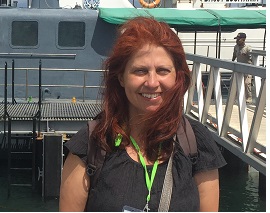
Cintia completed her MA in International Development at Saint Mary’s University, with a thesis on crab gathering and coastal conservation for communities of Vila Esperance and Vila dos Pescadores in Cubatao, Sao Paulo State, Brazil. Cintia noted that “the existence of healthy mangroves is extremely necessary for maintenance of marine life, and consequently, to maintaining subsistence fishing in many coastal communities in Brazil.” She worked in 2014 with crab fishers from the two small coastal communities in the mangrove area of southeastern Brazil. The residents of these communities are primarily migrants from northeastern Brazil who have few employment opportunities. Harvesting the land crab (Ucides cordatus), found in the mangrove areas and considered a delicacy by urban Brazilians, is one type of work with some economic return available to them. She looked at the lifestyle and empirical knowledge of crab gatherers and collected qualitative date through interviews and focus groups with community members about their problems with pollution, flooding, garbage in the mangrove, crab quotas and other issues. Cintia published her field research in Vila dos Pescadores in the journal Marine Policy (volume 89, 77-84, 2018) “Fishers in a Brazilian Shantytown: relational wellbeing supports recovery from environmental disaster”. [https://doi.org/10-101/j.marpol.20i7.12.008]
2. Coastal and Marine Conservation in Timor-Leste: Assessing the Contribution of Tara Bandu Community Conservation
In Timor-Leste, tara bandu is the customary law that manages the relationship between humans and between humans and natural resources. Local communities use traditional conservation practices through tara bandu rules to implement fishing, hunting and harvesting closures in certain areas. The purpose of this research was to analyze if community conservation practices (i.e. tara bandu) help to meet ecological and human community wellbeing goals. Some of these outcomes are measured by indicators of governance, and ecological and human community wellbeing. This research drew lessons for traditional conservation analysis through a focus on (1) How tara bandu practices lead to marine and coastal conservation in three Timorese communities on Atauro Island, (2) how tara bandu practices interact with governmental science and management, and (3) the potential applications of the indicators developed in this research to decision-making and management.